




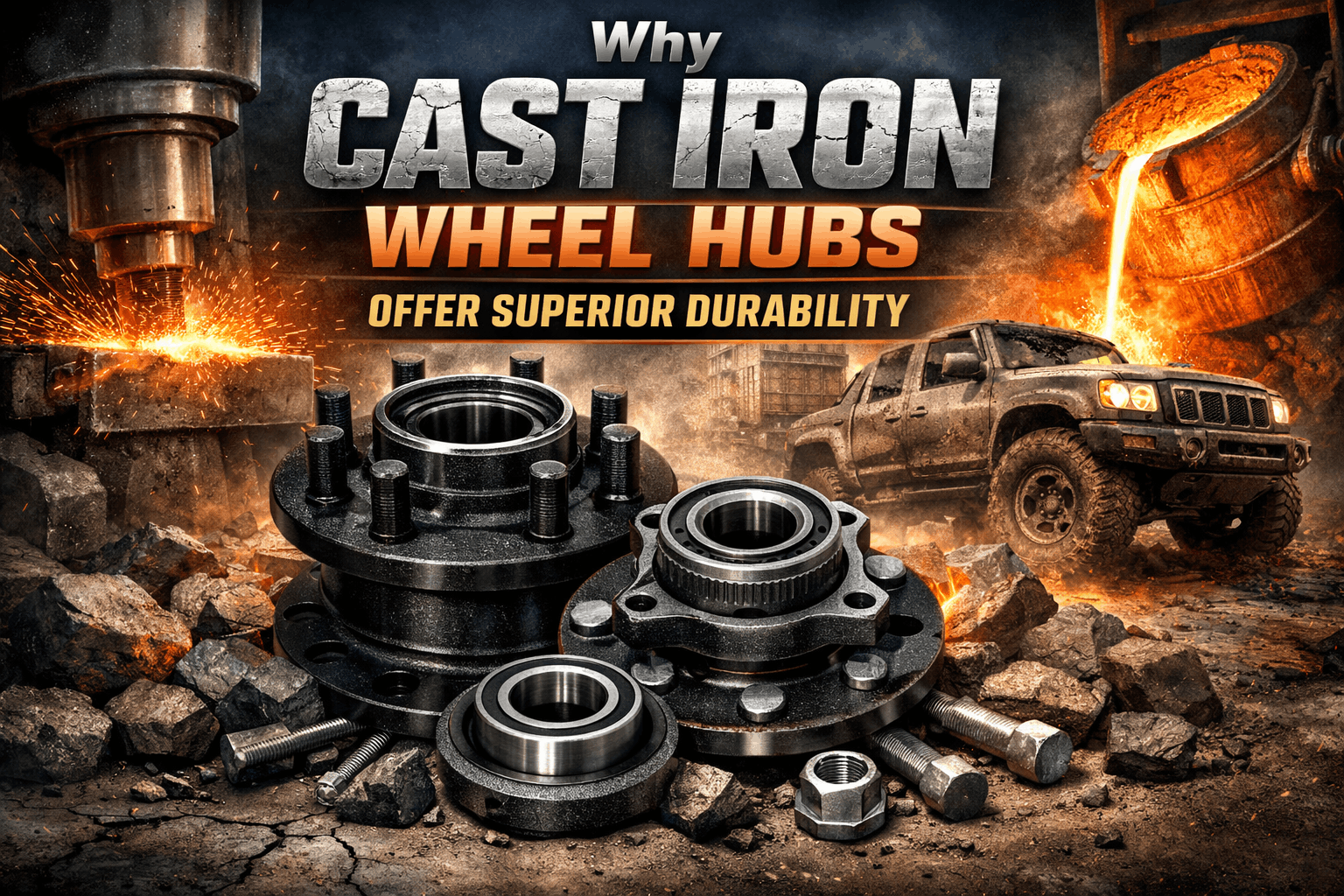
In the case of heavy machinery, each element is important. One weak part can slow down an entire operation. Among these components, the wheel hub experiences severe stress each day. It is attached between the axle and the wheel. It bears the burden. It absorbs shock. And it must do all this without failure.
Cast iron is the most commonly used material for wheel hubs. The cast iron wheel hub has long been spared in industries and heavy-duty services. It is not without reason. This blog highlights why cast iron is the most desirable material and remains superior in harsh conditions.
The primary assembly, which brings a wheel to its axle or shaft, is actually a cast-iron wheel hub. This point of connection supports the full load at its height in a machine wheel hub. It is also responsible for rotational forces acting on the wheel.
Cast iron is produced through the melting of iron and carbon, as well as other elements. The molten metal is cast into molds and left to dry into the required shape. This casting method enables the production of intricate, precise forms. It also provides cast iron with its unique internal structure, which contributes most of its performance benefits.
Wear resistance is one of the most important qualities in any moving component. Wearing-out parts should be replaced regularly. It implies additional downtime, additional maintenance expenses, and additional interference to operations.
The reason behind Cast Iron Wear-resistance
Graphite is found in the microstructure of cast iron. At the surface level, this graphite is a natural lubricant. Friction is minimized when two surfaces slide on a graphite. Reduced friction implies that reduced material is eroded with time.
This self-lubricating characteristic makes cast iron exceptional among other materials. Steel, for example, does not have this characteristic. A steel component will usually wear down more quickly than a cast-iron component.
Performance Under Abrasion
Many industrial conditions are abrasive. Moving parts become contaminated with dust and small particles. They are like sandpaper on component surfaces. Cast iron does not fail at this. It is highly resistant to abrasive wear due to its hardness and the presence of graphite in its structure.
In a cast-iron wheel hub used in mining, agriculture, construction, or manufacturing applications, such resistance to abrasion directly reflects an increase in service life.
Another vital performance parameter of any wheel hub on a machine is its load-bearing capability. The weight of the machine and payload should not exert sufficient pressure on the hub to deform or crack it.
High Compressive Strength
Cast iron is very good in compressive strength. This implies that it cannot be crushed or compressed under heavy loads. When a loaded vehicle or piece of machinery is on wheels, the force is passed down the hub. Cast iron is very adaptable to this downward force.
It is the reason why heavy industry equipment has long been made of cast iron. It is capable of bearing loads that would otherwise bend or shatter lesser materials without even developing indications of tension.
Stability with a Continuous Load.
There exist materials that perform well under abrupt impact but work slowly under continuous loading. This is referred to as creep. Cast iron exhibits very low creep rates. It maintains its shape even when forced to carry heavy loads over long distances. This stability is required for a machinery wheel hub mounted to run under a steady load during a working shift.
Shock and Impact Resistance.
Industrial conditions are hardly ever kind. The equipment collides with the uneven terrain. Loads shift suddenly. Wheels fall into holes or go across obstacles. The shock produced by each of these events traverses the wheel hub.
Cast iron prevents vibration and absorbs it. The internal structure of its graphite absorbs energy rather than conducting it throughout the part. This damping property is needed to absorb shocks and protect the hub and its attached components.
The shape and size of the wheel are retained by a cast-iron wheel hub. It does not increase or decrease sharply with temperature changes. It is not loaded without warping or distorting. This dimensional stability can be useful in machine work where tight tolerances must be met.
When the wheel hub alters slightly, there are changes in alignment. Misalignment results in wear imbalance, increased vibration, and accelerated damage to bearings and other components. The stability of cast iron prevents this chain of problems from beginning.
Compared to most other hard metals, cast iron is easy to machine. It is capable of being drilled, bored, and finished properly. This enables the use of cast-iron wheel hubs with accurate dimensions and smooth bearing surfaces.
Complex shapes can be made consistently by themselves in the casting process. The bearing seats, mounting flanges, and bolt patterns could all be cast into the hub in one production operation. This saves on needless machining and makes production affordable, while using high-quality material with high-performance properties.
Wear resistance, load-bearing strength, shock absorption, and dimensional stability are combined and add up to one thing: the long service life. A well-made cast-iron wheel hub lasts longer than one made of lower-quality materials.
Any replacement part demands a period of downtime. Downtime costs money. An item that endures twice as long as a cheaper substitute is, in nearly every case, the more economical choice when the entire cost picture is considered.
Aluminum wheel hubs weigh less, but lose carrying capacity and wear capability. They are used in situations where weight loss is a concern. In the case of heavy working equipment, there are insufficient.
Plastic and composite hubs are ideal for light applications or low-speed requirements. They cannot be used on high loads, in gritty environments, or in intensive service.
Ductile iron is cast iron that has been added to make it flexible. It works well in the applications that value impact resistance. At a competitive price, standard gray cast iron will provide the proper hardness, wear resistance, and load-bearing capability for most heavy machinery applications.
The cast iron wheel hub is famous for its consistent performance under the most adverse conditions. Cast iron material provides durability without compromise.
Exhaust gases are generated by all vehicles. These gases must leave the engine rapidly and in a controlled manner. Th...
READ FULLYour exhaust pipe is straining every other day. It removes hot gases from your engine and helps keep your car running...
READ FULLOEM manufacturers and auto repair shops regularly inspect exhaust pipes. It is not something that you purchase and fo...
READ FULL