



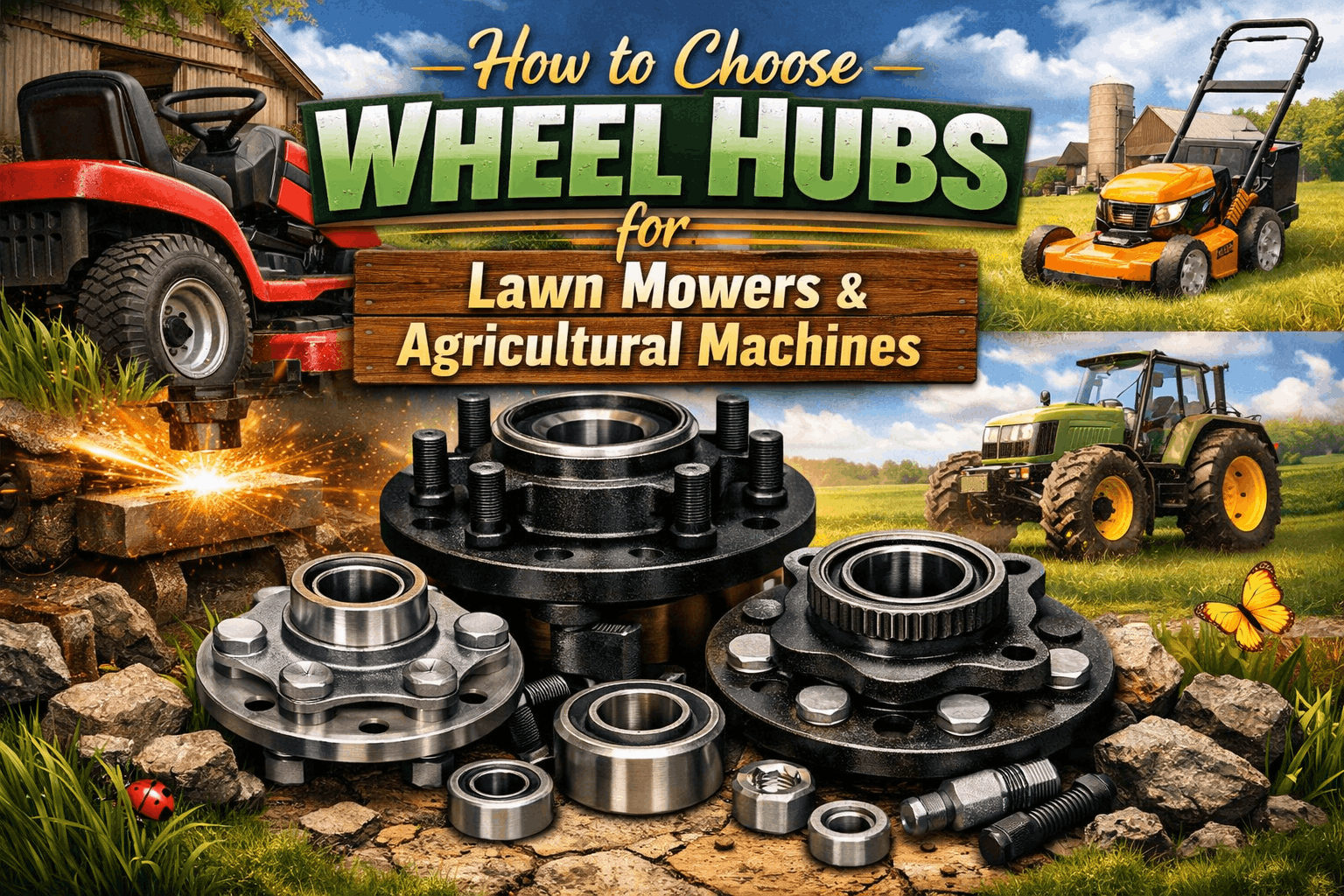
A wheel hub may seem insignificant. But it plays a big part in your machine's performance. It links the axle with the wheel. It supports the machine's size. It makes everything flow and be in line. Get the wrong hub, and you'll get the wobbling wheels, early bearing wear, and costly downtimes.
With lawn mowers and agricultural machines, the correct wheel hub is not an issue. It does consider some major factors, though, such as bolt size and pattern, and bearing compatibility. These three things will get you off well, and your hub will last a long time.
Farmers and lawn mowers work in harsh environments. They are driven in rough places. They carry heavy loads. Their work is in dirt and mud, wet grass. All this stress is interred in the wheel hub.
A misfit is very soon detected with a hub that does not fit properly. Lack of alignment causes uneven tire wear. An incompatible bolt pattern means the wheels cannot fit. The two are not compatible, so the hub will overheat and wear out quickly. They are not those little inconveniences. A failed hub in a working agricultural environment can bring the whole operation to a halt.
It is worth seven minutes in frustration to spend some time now and select the right hub.
The first thing that should be right is size. One that is incorrectly sized will never fit in as a hub. And even if it could be forced into position, it will not work properly.
Bore Diameter
The bore refers to the hole in the hub. It fits over the axle. The bore diameter should be the same as the axle diameter. Excessively tight, and the hub will not fit. Too loose, and the hub will vibrate on the axle during operation. This vibration causes damage to the axle, hub, and bearings as quickly as possible.
Before ordering a hub replacement, measure the axle diameter to ensure it is considered. Be precise when using a caliper. Do not estimate. A difference of one millimeter is problematic.
Hub Width and Offset
The width of the hub influences the way the wheel fits on the machine. When the hub is either too slim or too broad, the wheel will not fit in the right position. This is influenced by steering, stability, and ground clearance.
The distance between the wheel face and the hub mounting surface is called the offset. An incorrect offset changes the machine's track width. This may influence the turning and even the cutting of a lawnmower. Farming machinery affects balance and harvest clearance.
Always use the original equipment work specifications for the hub width and offset. Compare these numbers with the replacement options.
The bolt pattern identifies how the wheel is fitted to the hub. It is one of the most common points at which customers make mistakes. The wrong type of bolts would mean the wheel could not be fixed. It is a non-compromise specification.
What Is a Bolt Pattern?
The bolt pattern describes two terms: the quantity of the bolt holes and the diameter of the circle on which they are situated.
When changing the hub, confirm the bolting pattern of the existing hub or the wheel to be charged. Both should be identical to the new hub.
Bolt Hole Size
Other than the pattern, the bolt hole sizes also count. The holes should take the bolts or the wheel studs, but they should not play out. Holes in the bolts increase the weight when clamped and may cause the wheel to become loose in use.
Bearings are found within the hub of wheels. They enable the hub to spin smoothly about the axle. One of the most vital technical specifications to match properly is bearing compatibility.
The Importance of Bearing Size
The bearing must be large enough to fit the hub housing; otherwise, it will slide in the housing when in use. This leads to rapid wear off and subsequent failure. In case it is too big, it won’t fit anywhere. The hub housing and axle shaft bearing must be the appropriate size.
Kinds of Bearings in Lawn Mowers and Agricultural Hubs.
The most prevalent type in the lawn mower wheel hubs is the ball bearing. They are moderate-load handlers that operate at high rotational speeds. They are quite standardized and can be changed very readily.
Tapered roller bearings are used in heavier agricultural equipment. They can handle higher loads and are capable of handling radial and axial forces. They need proper preload regulation when installed. Too snug or too loose, they wear right fast.
Always determine the type and size of the bearing fitted in the original hub. Precisely mirror this in the substitute. Bearing dimensions are standardized, but the codes are stamped on the bearing.
Sealed vs Open Bearings
Sealed bearings are sealed with lubricants, either a rubber or metal seal that keeps grease inside and contaminants outside. They do not require many demands and can be used very well in lawn mowers and light agriculture.
Greasing should be done regularly in open bearings. They are used in heavy machinery where more frequent maintenance is already part of the routine. In conditions with muddy or wet farms, sealed bearings may wear out longer since they are not as vulnerable to contamination.
After confirming the specifications, the quality of materials is an issue. The cast iron hubs are very durable and wear-resistant when used excessively in agriculture. Steel hubs are robust and common in both lawn mowers and agricultural machinery. Hubs made with plastic or nylon are only very light-duty.
Ensure that the hub is constructed to standard. Establish clean boreal holes in bearing seats and bolt holes, drilled and deburred smoothly. The provision of a badly completed hub leads to issues irrespective of the specification match.
Different machines from different manufacturers have different hub specifications, despite their similar appearance. The hub of one lawn mower brand may not fit another, even if the machines appear similar in size.
It is always possible to cross-reference the original hub's part number, should it still be readable. Call the manufacturer or a specialist supplier using the machine maker, model, and year of manufacture. It is the surest mechanism of establishing compatibility to make an order.
Deciding on the right wheel hub for a lawn mower or agricultural machine involves three key factors: getting the correct size, ensuring compatibility in bolt count, and verifying the bearing fits. All three elements specify the hub's fit, safe performance, and sustainability. Measure all specifications and check them before purchasing; the result will be a good, durable fit that keeps your machine running continuously.
Exhaust gases are generated by all vehicles. These gases must leave the engine rapidly and in a controlled manner. Th...
READ FULLYour exhaust pipe is straining every other day. It removes hot gases from your engine and helps keep your car running...
READ FULLOEM manufacturers and auto repair shops regularly inspect exhaust pipes. It is not something that you purchase and fo...
READ FULL