




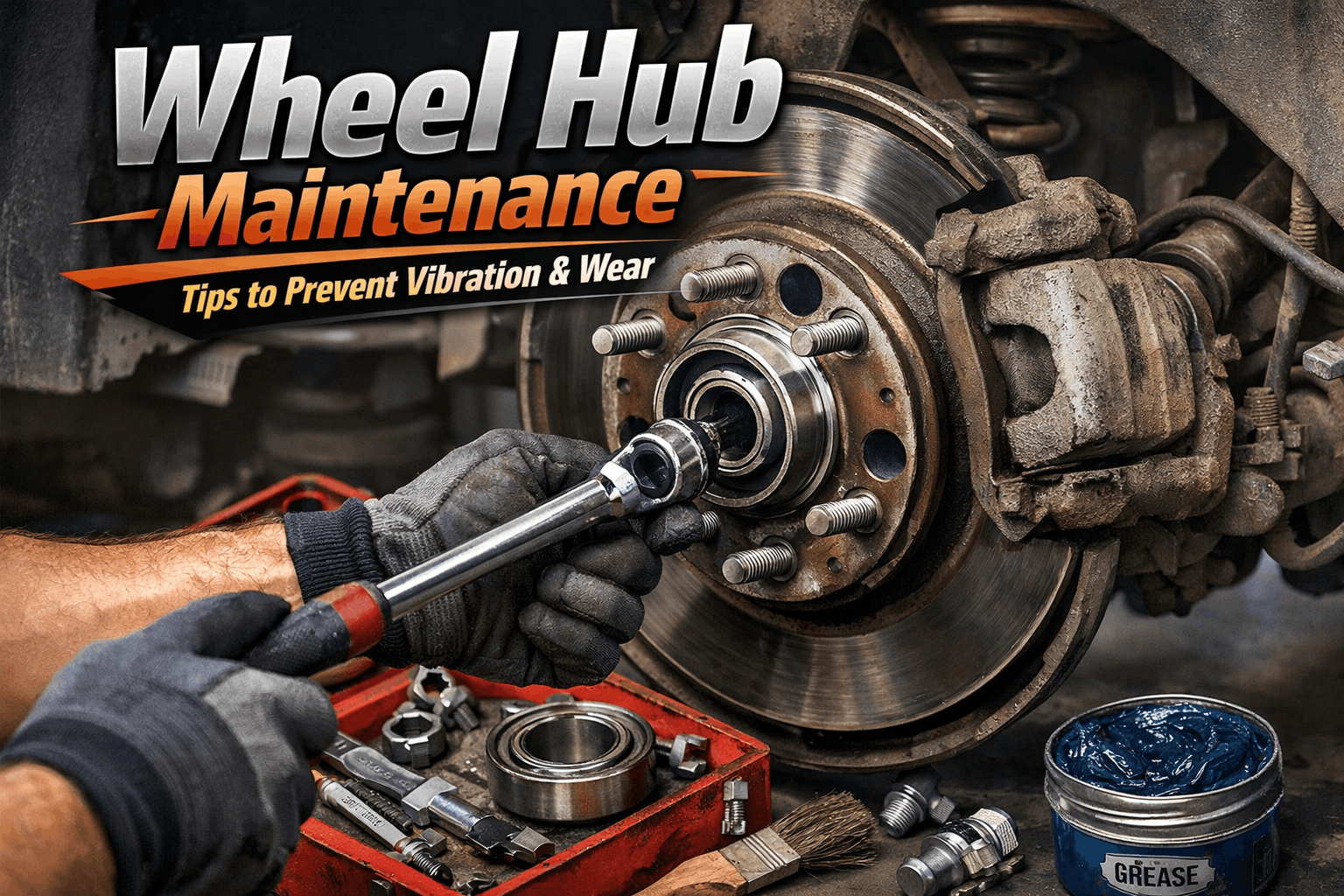
A wheel hub may seem insignificant. It bears a great responsibility, however. It joins the axle with the wheel. It maintains everything in a smooth rotation. Once it begins to go wrong, you know it. Vibration, uneven wear, weird sounds, all these are indications that something is wrong.
These issues are avoided by good maintenance of wheel hubs. It is similar whether you are working on a regular car or performing tractor wheel hub care. Clean it. Grease it. Inspect it. Do this frequently, and your wheels will last longer.
Most individuals do not consider the wheel hub until there is a complication. That's a mistake.
An unused hub is dirty and moist and rusts out. The bearings within are prone to wear. The grease dries out. Then the vibration starts. Initially, it is small. Then it gets worse. If it takes too long, the entire hub might fail. That is expensive maintenance and time lost.
This is more essential about tractors and farm equipment. Tractors work under harsh conditions. The wheel hub is exposed to additional stress caused by mud, dust, water, and heavy loads. Regular care of tractor wheel hubs is no longer optional. It's necessary.
The positive thing is that maintenance is not complex. There is no need for fancy equipment. All you have to do is be consistent.
The answer is not a single one. It will be based on how often the vehicle is to be used and the conditions under which it will be used. For normal vehicles, the wheel hub test should be performed at least once every 12,000-15,000 kilometers. Increase the frequency of checks with the tractor and heavy machinery. A quick check is never out of place after tough workdays in muddy or wet conditions.
Wait before a vibration starts, then check. At this moment, the damage has been created. Check-ups help to save money, time, and stress.
The initial process in any wheel hub maintenance procedure is cleaning. You can't properly inspect or grease a hub that's covered in dirt and grime.
Take off the wheel first
Start by safely lifting the vehicle and removing the wheel. Place on a flat surface. Before working on the car, always keep it on a jack stand.
Remove the dirt
Loose dirt and mud can be removed using a hardened brush. Then wipe the hub's surface with a clean cloth. When grease is persistent, or mud is stuck on, apply a light degreaser. Spray it on and wipe off after a minute.
Wipe up the bearing area
The bearings' surroundings should be given special care. Here are old grease, dust, and metal particles. Clean up with a cloth. Others will apply a small brush to reach the tight areas. Be gentle. You don't want to damage the bearing surfaces.
Dry it completely
It is important to dry the hub completely after cleaning and replacing the grease. Moisture under grease leads to rust. Delay a while here.
It is grease that keeps everything moving smoothly. Bearings tend to wear quickly without proper lubrication. This is among the most significant procedures of maintaining wheel hubs.
Choose the right grease
Not all grease is the same. Go for water-resistant bearing grease. In the case of tractors, the grease should be able to take heavy weights and withstand high temperatures. Consult your vehicle manual, in case of doubt as to the type.
Apply grease to the bearings
Hold the bearing in your hand and stuff it full of grease all the way round. Blot with your fingers or with a bearing packer tool, should you happen to have one. Make sure the grease reaches all the spaces between the rollers. A dry bearing will soon wear away.
Don't over-grease
Having more is not necessarily good. Excessive grease can result in heat accumulation. It is also able to move out seals. Spread a sufficient amount to cover all the moving parts, but do not stuff the hub's interior to capacity.
Check the grease seals
During the assembly process, inspect the hub's rubber seals. Such seals are against dirt and grease. In case of the cracking, tearing, or hardening of a seal, change it. A bad seal will let contaminants in and grease out, despite how well you greased the bearings.
It is important to clean and to grease. However, inspection is what helps you identify problems before they become serious.
Check the bearings for wear
Take the bearing in your fingers and turn it slowly. It must be able to feel smooth. When it becomes rough, gritty, or catches along the way, it is worn out. Replace it. A worn-out bearing will create vibration and might stop altogether.
Look for rust and corrosion
Inspect the hub surface and bearing races for possible signs of rust. The surface rust can be removed. Deep pitting or corrosion indicates that the part should be replaced. Rust makes metal weak and cracks it after some time.
Inspect against cracks or damage
Have a critical look at the hub itself. Inspect the holes of the bolts and the center bore. Cracks in these areas are serious. A damaged hub may fail at any time. In case of a crack, do not use the vehicle. Immediately replace a hub.
Check the wheel studs
As all is out of the way, test the wheel studs. The threads must be clean, undamaged, and straight. Bent or stripped studs have to be replaced. Loose or damaged studs may make the wheel wobble, hence produce the vibration.
Check wheel bearing play
When all is put back, take the wheel at the top and bottom and attempt to rock it. There should be very little to no movement. When the wheel rocks or is loose, the bearing should be adjusted or replaced. Excessive play is a definite indicator of damaged or poorly fitted bearings.
Maintenance sometimes can be delayed. Sometimes it is not possible. These are indicators that you should move at a speed.
You can feel the vibration always on the steering wheel or the floor. It can be heard as a grinding or humming noise, increasing in intensity as speed increases. When you attempt to rock the wheel, it feels loose. On one side, you see uneven tire wear. The hub feels hot to the touch after driving.
All these indications imply that the hub requires immediate attention. Don't delay.
Tractors should be given special consideration due to their working environment.
• Wipe the hubs clean after being in wet or muddy fields. You might not want to leave mud seated on the hub overnight.
• Check hub bolts regularly. Tractors shake a lot when in use. Bolts may become loose with time. A loose hub bolt is dangerous. Tighten them to the proper torque as shown in your tractor manual.
• When your tractor has grease nipples on the hubs, you pump new grease into it using a grease gun at the required frequencies. It is fast and not widely done, but very easy. Don't skip it.
Maintaining wheel hubs is not a complex task. It is simply cleaning, greasing, and checking as part of a routine. Always do these three, and you will not go into vibration, it will wear less, and your wheels will last longer.
Be it a car, a truck, or a tractor, it is the hub that keeps your wheels on your ride smooth. Take care of it. It will take care of you.
Exhaust gases are generated by all vehicles. These gases must leave the engine rapidly and in a controlled manner. Th...
READ FULLYour exhaust pipe is straining every other day. It removes hot gases from your engine and helps keep your car running...
READ FULLOEM manufacturers and auto repair shops regularly inspect exhaust pipes. It is not something that you purchase and fo...
READ FULL