




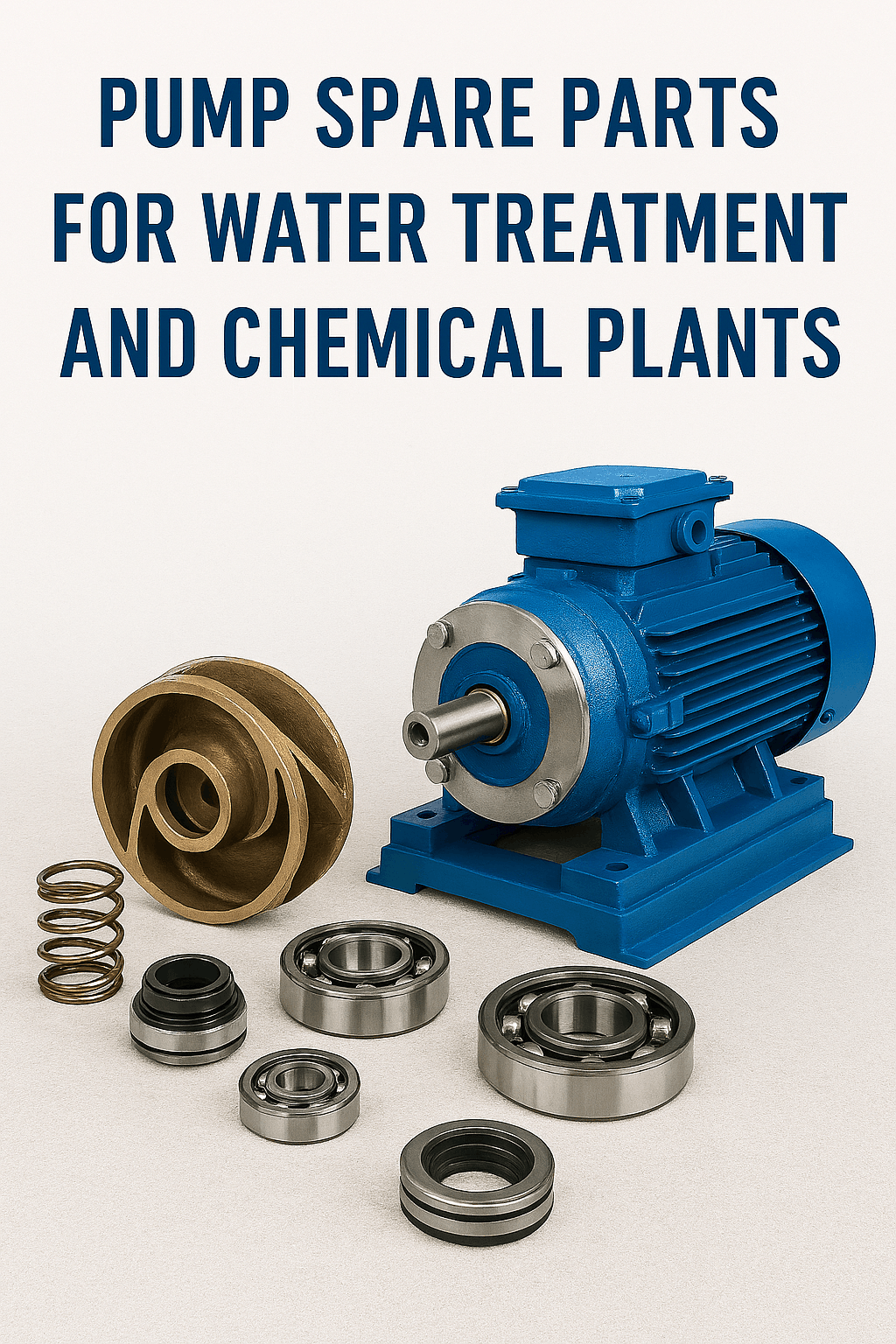
Choosing the appropriate pump spares is an important aspect of the plant. Pumps are needed daily in water treatment and chemical plants. The wrong components result in failures and high-cost unproductive downtime. This manual makes it easy to select the required spare parts of the pump. Better decisions can be made by understanding important factors.
Pumps handle various fluids at treatment plants. Water appears to be harmless, but it has its minerals and particles. The corrosive and abrasive substances are pumped into chemical plants. Every application has its individual part specifications. Generic components tend to wear out easily in harsh environments.
Another important aspect is safety. Pump failure is a serious threat to chemical plants. Seals may leak hazardous substances. Failed impellers might also terminate vital processes. These dangerous conditions are avoided by choosing effective pump spares.
Cost efficiency will be based on selecting the right parts in the first place. Inexpensive substitutes require regular changing. This brings in additional time and labor costs. The quality parts used in the application are highly durable. The overall cost in the long term would be significantly reduced.
Centrifugal Pumps
The most common ones in the treatment plants are centrifugal pumps. They generate rotating impellers to implement fluid movements. The rotation generates pressure that forces the liquid through the system. These pumps are very important to most water treatment facilities.
The components of a centrifugal pump are the impeller and seals. Every part should be compatible with all types of pumps. The materials should be used to pump a particular fluid. It is also important in temperature and pressure ratings.
These pumps are suitable for cleaning and slightly polluted water. They are capable of managing large amounts. Centrifugal pump parts, however, are less prone to wear from abrasive fluids. These wear patterns have to be considered in selection.
Positive Displacement Pumps
Positive displacement pumps take a definite volume of fluid with each stroke. They create suction, drawing the liquid into the chamber. They then push out the fluid by discharging. They are often used in chemical plants to deliver precise doses.
Centrifugal pumps are more commonly used for heavy, viscous fluids than for light ones. They do not change flow with changes in pressure. This renders them useful in chemical feed. These pumps have different spare parts. Ordinary wear parts include diaphragms, valves, and plungers. Materials must be compatible with chemicals. The improper materials dissolve or corrode quickly.
Fluid Compatibility
Material requirements depend on the fluid being pumped. Water appears safe, but the pH is not stable. It is an acidic or alkaline water that attacks some metals. Chemical plants are much harsher substances. Many corrosive chemicals and water resist stainless steel. Certain grades, however, are appropriate to various applications. Exotic alloys or plastics are needed in some chemicals. Material compatibility charts determine these decisions.
The chemical resistance should always be checked before parts are ordered. Manufacturers provide compatibility details. The use of such resources helps to avoid costly errors. The fluid contact materials cannot be compromised.
Temperature Considerations
The operating temperature is a major factor in the part selection. High temperatures require heat-resistant materials. Seals and gaskets are very sensitive to temperatures. Ordinary rubber seals do not work in hot operating conditions.
Most chemical processes require high temperatures. Under these conditions, the pump parts should withstand the pressure. High temperatures also affect metal expansion rates. The clearances vary with the heating of the components. There are cold applications that have different problems. At low temperatures, some materials become brittle. Some seals are not flexible at low temperatures. The temperature range specifications are used to choose appropriately.
Pressure Ratings
There are certain pressure ranges in which both pumps work. Spare parts shall withstand the maximum operating pressure. The under-rated parts do not withstand pressure. This poses hazardous conditions at the chemical plants.
The centrifugal pump reinforcements do not have similar pressure levels. Low pressure is experienced in the impeller inlet. High pressure is on the discharge side. Seals are expected to withstand this pressure difference.
Safety-related items are included in the pressure ratings. No matter the operating pressure, do not choose parts at that operating pressure. Selection of components that are well beyond rated conditions. This provides a safety margin against pressure spikes.
Impeller Selection
Centrifugal pumps revolve around the impeller. It should fit exactly into the casing of the pump. Design and diameter directly influence the pump's performance. Unsuitable impellers slow down the flow and efficiency.
The choice of material used in impellers is very important. Cast iron works in clean water. The bronze or stainless-steel suit resists corrosion. Hard coatings protect against abrasive particles. The balance is necessary for smooth operation. An imbalance in the impellers generates vibration. This vibration destroys bearings and seals. Always buy good, quality impellers.
Seal Systems
Mechanical seals prevent fluid leakage along the shaft. They are the usual points of failure in the pump system. Most pump leaks can be avoided by proper seal selection.
The material used in seals should withstand the fluid pumped. The materials used on the seal faces should be compatible. Common ones are carbon and silicon carbide. Each is suitable for various applications and fluids. There are different seal cooling and lubrication needs. Certain seals require external water to cool down. Still others fill up with no trouble. Knowledge of these needs will be used to choose the pump spares.
Bearing Selection
Bearings are needed to sustain the rotating shaft. They have to deal with the radial and axial forces. Failure of bearings causes seal issues and shaft wear.
Smaller pumps have grease-lubricated bearings. Lubrication in an oil bath is appropriate for large units. The bearing lubrication process influences the choice of bearing type. Bearing choice is also divided into operating speed. Closed bearings ensure contamination from dirty surroundings. Open bearings must be kept clean. Sealed options are usually in demand in chemical plants. Chemical vapor protection is necessary.
Giving the Right Information
The suppliers require full details on pumps to get the correct parts. The pump manufacturer's name and model number are also necessary. Specific configurations are identified using serial numbers. Existing part photos also help with identification.
Working conditions should be clearly communicated. Some important details include the types of fluids, temperature, and pressure. Part requirements are influenced by flow rate and speed. All information guarantees proper recommendations.
Application details are used to recommend improvements to suppliers. Problem explanation using existing parts is directed to improved selection. Suppliers with experience offer insights. Their knowledge improves the selection of pump spares.
Quality Verification
Not every spare part is of the same quality. Parts supplied by an original equipment manufacturer are compatible. There are, however, cheaper aftermarket alternatives. Confirming the quality of the aftermarket will prevent failures.
Request material certifications on crucial aspects. The alloy composition is adequate according to the test reports. Dimensional inspections detect manufacturing correctness. Good documentation makes the purchase price worth it. Warranty coverage implies the confidence of the manufacturers. The longer the warranty, the higher the quality of parts. Make comparisons of warranties amongst suppliers. The difference in quality is evident in this comparison.
• The essential spares must remain in inventory. Pumps break down when they are least needed. The availability of parts reduces downtime. Determine what to stock in the failure history.
• Centrifugal pump parts deteriorate frequently. Store these products in maintenance stock. Impellers are more durable, and they should be in stock. Weigh the inventory expense on downtime risk.
• Develop a relationship with trusted suppliers to deliver fast. Certain sections could be shipped overnight on demand. Others require custom manufacturing time. Planning avoids an emergency.
It is necessary to choose the right pump spares for water treatment and chemical plants, as the processes are critical in many respects. The correct selection of pump spares will minimize failures, reduce idle time, and ensure safe operations in the most important treatment premises.
Exhaust gases are generated by all vehicles. These gases must leave the engine rapidly and in a controlled manner. Th...
READ FULLYour exhaust pipe is straining every other day. It removes hot gases from your engine and helps keep your car running...
READ FULLOEM manufacturers and auto repair shops regularly inspect exhaust pipes. It is not something that you purchase and fo...
READ FULL