




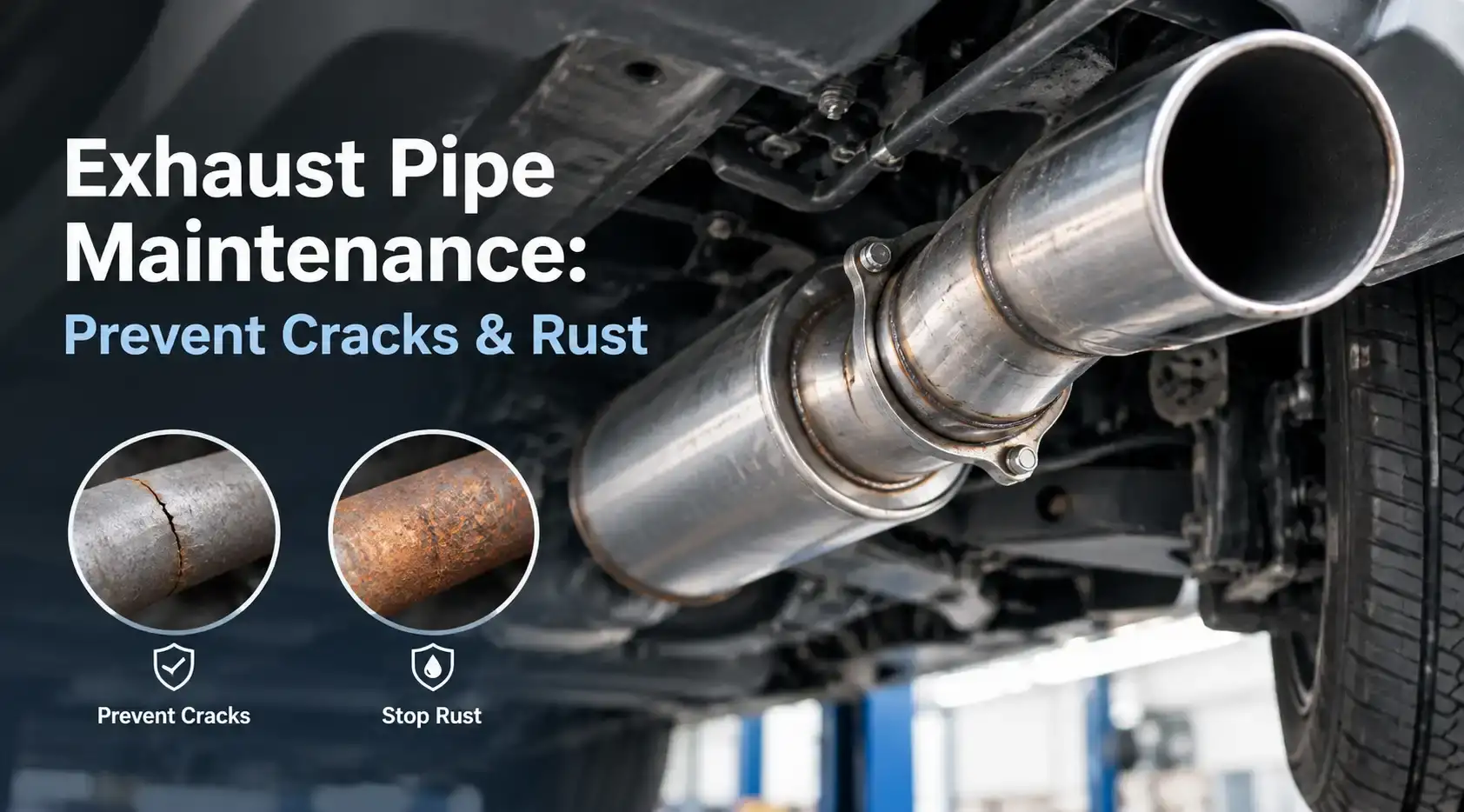
Your exhaust pipe is straining every other day. It removes hot gases from your engine and helps keep your car running quietly. However, most people pay little attention to it until something goes wrong. A broken or rusted exhaust pipe can cause loud noises, poor fuel mileage, and even safety hazards in your vehicle. The upside is that exhaust pipes are easy to maintain regularly. All you need to know is what to check and how to do it.
The exhaust system is subjected to excessive heat each time you are on the road. It cools down quickly after you park. This constant heating and cooling strains the metal. After some time, small cracks begin to develop. Water is another major factor. Moisture from rain and roadways gets trapped in the pipe. That moisture sits there when the engine is cold. It gradually corrodes the metal from the inside out.
Short trips worsen this. And when you drive for only five or ten minutes, the pipe never gets hot enough to dry out the moisture. So, if you primarily do short urban routes, your exhaust is more prone to rust.
Decreased fuel efficiency - A damaged exhaust will influence engine performance.
Check your exhaust pipe as soon as you notice any of these.
A simple check does not require a mechanic. First, park your vehicle. Wait until it has cooled, then you can slip under it. Check the length of the pipe. Inspect the rust spots or cracks around the joints and bends. These are the most stressed areas.
Also, check the rubber hangers that keep the pipe in place. If they appear cracked or broken, the pipe may fall and be further damaged. Give the pipe a gentle shake. It must be hard, but not soft.
Cast iron exhaust parts are also used in most older vehicles and in high-speed engines. Cast iron is hard and very heat-resistant. It's also heavy and more brittle than steel. It may break when the temperature suddenly changes or when an object strikes it.
Cast iron's enemies are dirt and moisture. After driving through mud or water, rinse the bottom of your car if you can. This removes the dirt that retains moisture on the metal. Allow the exhaust to dry completely before it sits for a long time.
When caring for cast iron exhaust, use a high-heat paint or coating. These can withstand temperatures over 1,000 degrees. Normal paint will burn away easily, exposing the metal.
Not always. Surface rust is common and doesn't necessarily mean the pipe is on the verge of failure. If the rust is only on the surface and the underlying metal remains solid, a wire brush and a high-heat coating can delay damage. Nevertheless, if rust has broken through the pipe wall, it's better to replace the pipe.
Simple Steps for Regular Exhaust Pipe Maintenance.
Maintaining exhaust pipes doesn't take much time. The following are the measures to be adhered to keep your pipe in good condition:
Carbon monoxide is colorless and odorless and is hazardous in confined spaces. A minor crack in the front of the car may force the fumes into the cabin by pushing through cracks in the floor or firewall. If you get a little dizzy or smell something you're not sure about while driving, pull over and get some fresh air.
It is a good habit to do a quick visual check every three months. Be sure to have a proper inspection at least once a year, especially before winter. One of the largest causes of rust is road salt. By heading off to it before winter, you can lengthen the life of your pipe by a few years.
It depends on how severe the damage is. If there is just a single small crack, it makes sense to repair it. However, if there are several rust spots, frequent leaks, or the metal is thin and weak, replacement is a better investment. A new pipe will be more durable and will give you peace of mind.
It's easy to overlook your exhaust system. It sits under your car and does its job without much attention. Yet a little attention goes a long way. Regular exhaust maintenance keeps your car quieter and more economical.
You can use a standard steel pipe, or you may need special cast-iron exhaust handling. The procedure is easy. Wash it, paint it, examine it, and correct minor issues before they escalate. It really only takes that much.
Q1. What are the main uses of exhaust pipes in a vehicle?
Exhaust pipes carry harmful gases away from the engine, reduce noise, and help maintain proper fuel combustion.
Q2. What are the key features to look for in a high-quality exhaust pipe?
Look for heat-resistant material, corrosion-proof coating, a proper fit for your vehicle model, and strong weld joints.
Q3. What are the benefits of investing in a premium exhaust pipe?
A premium exhaust pipe lasts longer, performs better, reduces noise, and protects your engine from back-pressure damage.
Q4. How do exhaust pipe prices vary between wholesalers?
Prices vary based on material grade, pipe size, brand, and whether the wholesaler offers OEM or aftermarket products.
Q5. Where to buy exhaust pipes online in bulk?
You can buy exhaust pipes in bulk from B2B platforms like Alibaba, Global Sources, Made-in-China, or directly from manufacturer websites.
Q6. How to choose the right supplier for exhaust pipes?
Choose a supplier who offers certified materials, clear product specs, reliable shipping, good reviews, and after-sales support.
Q7. How to source exhaust pipes for your business?
Source exhaust pipes by contacting verified manufacturers on trade platforms, requesting samples, comparing quotes, and checking quality certifications.
Q8. Why should businesses buy exhaust pipes from a wholesaler instead of retail?
Buying from a wholesaler gives you lower per-unit cost, bulk availability, and better margins for resale or fleet maintenance.
Exhaust gases are generated by all vehicles. These gases must leave the engine rapidly and in a controlled manner. Th...
READ FULLYour exhaust pipe is straining every other day. It removes hot gases from your engine and helps keep your car running...
READ FULLOEM manufacturers and auto repair shops regularly inspect exhaust pipes. It is not something that you purchase and fo...
READ FULL